10 stories
·
0 followers

As Some Dems Run From Trans People, Zohran Mamdani's Latest Ad Shows Real Support

1 Comment
Until Its Done // Zohron Mamdani Campaign

Erin In The Morning is a reader-supported publication. To receive new posts and support my work, consider becoming a subscriber.

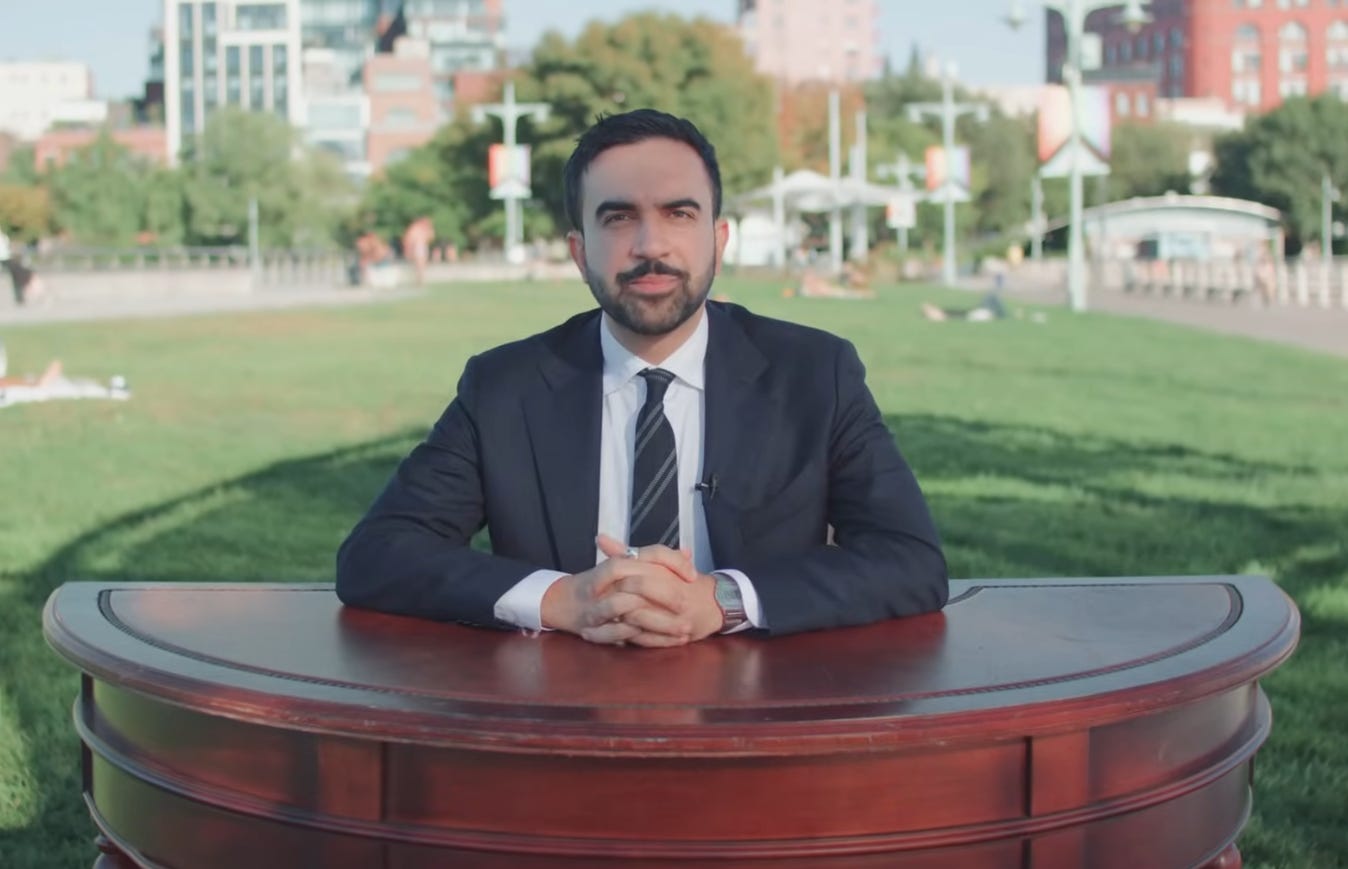
Ads featuring transgender people have dominated political airwaves in recent election cycles, with more than $200 million spent targeting them in 2024 alone. These ads almost always traffic in hate rhetoric aimed at transgender citizens, while Democrats—charged with defending their rights—too often stay silent, hesitant to speak with conviction. Making matters worse, “centrist” political consultants continue to urge Democrats to drop transgender people altogether. Almost never does a Democrat release a campaign ad affirming support for transgender people. That changed this weekend, when Zohran Mamdani, a New York City mayoral candidate, released a two-minute advertisement steeped in transgender history and direct commitments to the community.

The ad, set to transgender artist SOPHIE’s “It’s OK to Cry,” opens with the story of Sylvia Rivera, a trailblazing activist who helped lead the Stonewall uprising and lay the foundation for the first Pride. It then traces landmarks of New York’s queer history, weaving in Rivera’s friendship with Marsha P. Johnson, before pivoting to the present: a direct condemnation of Donald Trump’s escalating attacks on transgender Americans. Mamdani closes the ad with concrete pledges—to declare New York City an LGBTQIA+ sanctuary, to allocate millions toward restoring transgender healthcare defunded under federal pressure, and to deploy “hundreds of lawyers” to combat the administration’s anti-LGBTQ+ agenda.

You can see the ad here:

The ad serves as a masterclass for Democrats on how to talk about transgender people with empathy and conviction. Many of Mamdani’s own supporters may not know the history he highlights, and so it serves the purpose to educate his supporters in how to humanely talk about transgender people. Through this framing, he grounds his stance in moral clarity rather than political expedience—a rare trait in modern campaigns. For voters on the fence, the ad demonstrates that his support for transgender rights isn’t a focus-grouped calculation; it’s a reflection of his core values. In doing so, Mamdani not only strengthens trust among progressives but also draws in those who may have felt ambivalent, offering them something increasingly scarce in politics today: authenticity.

Mamdani’s ad stands in stark contrast to a growing trend among Democratic leaders who have pushed transgender people to the margins—or abandoned them outright. California Governor Gavin Newsom, despite leading one of the nation’s most progressive states, has spent recent months courting conservative media figures while floating bans on gender-affirming care for people under 25 and vetoing bills meant to protect trans residents. In Massachusetts, Rep. Seth Moulton echoed right-wing talking points, claiming he feared his daughter might be “run over on a playing field” by a trans girl—then defended his rhetoric as a strategic attempt to win elections. Even our first transgender Representative McBride, who has herself leaned into such arguments and has been heavily criticized by transgender community members, called for politicians to not get too far ahead of public opinion on trans issues. These politicians have framed their approach as pragmatic politics. Mamdani’s, by contrast, is rooted in something none of them have shown: conviction, courage, and a willingness to lead rather than triangulate.

This ad isn’t a one-off gesture—it’s consistent with how Mamdani has led. Earlier this year, long before his rise in the polls, he stood on the front lines of protests against NYU Langone after the hospital dropped transgender patients under pressure from Trump administration directives. While many Democrats have condemned attacks on trans healthcare, few have dared to call out the deeper problem: the moral collapse that comes with capitulation. Mamdani did so openly, at a time when there was no political upside. That choice, made before his campaign gained momentum, underscores what the ad now makes undeniable—his convictions aren’t performative; they’re the core of who he is as a leader.

Now, as Mamdani’s campaign stands on the verge of making him one of the most recognizable Democratic leaders in the country, he’s proving that he isn’t abandoning the vulnerable communities who helped elevate him—he’s centering them. Where others see transgender people as a political liability, he treats their inclusion as a measure of moral clarity. It’s a posture that has resonated beyond New York. In Kentucky, Governor Andy Beshear—a Democrat who won reelection in a state Trump carried by 30 points—offered a similar reflection on how authenticity and conviction win trust. “Earning trust and showing people you care about them also requires that we talk to people like normal human beings,” he said. “I vetoed anti-LGBTQ legislation last year because I believe all children are children of God. And whether people agree with my decision, they know why I’m making it.”

Clearly, this political principle of leading with your values is one that the Mamdani campaign has taken to heart. At a time when too many Democratic consultants are urging candidates to mimic Republican talking points, especially on transgender rights, Mamdani is showing the opposite path: one rooted in conviction, not calculation. It’s a lesson his party—and even supposed progressives abroad—have forgotten in their scramble to appease an ascendant right. Their capitulation hasn’t stopped the backlash; it’s only legitimized it. By contrast, Mamdani’s unapologetic embrace of marginalized communities shows what real leadership looks like: a politics that doesn’t ask whom to abandon to win, but whom to lift up to build something worth winning for.

Erin In The Morning is a reader-supported publication. To receive new posts and support my work, consider becoming a subscriber.

Read the whole story
leisurist
113 days ago
reply
Real leaders have spines.
Share this story
Delete

Manufacturing National Park Nature

1 Share
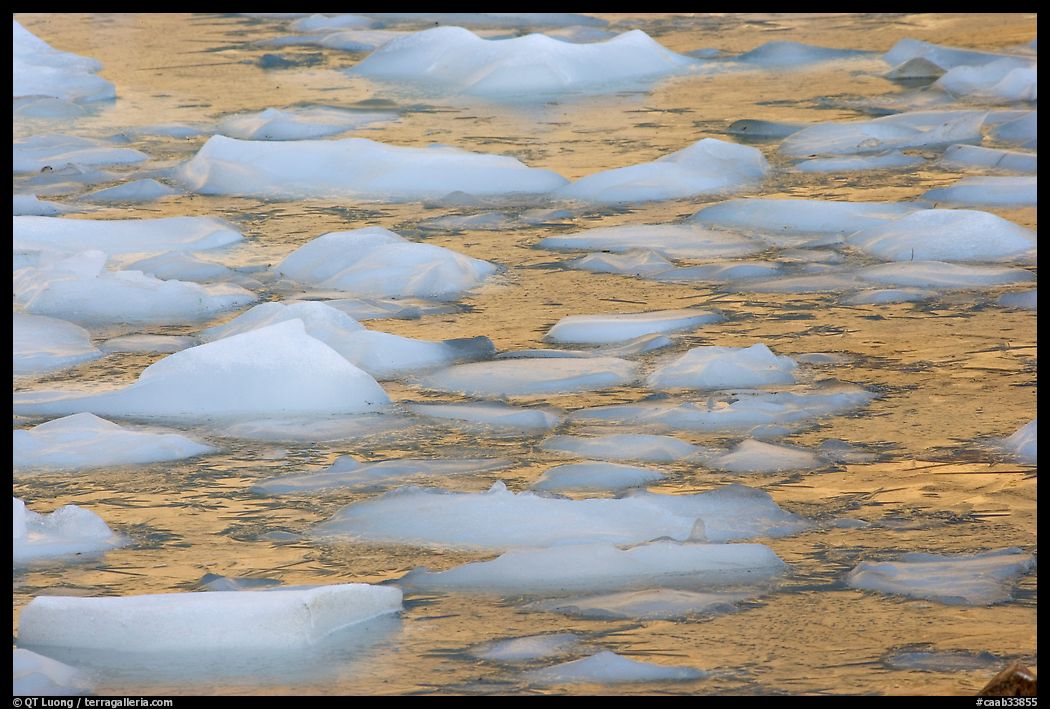
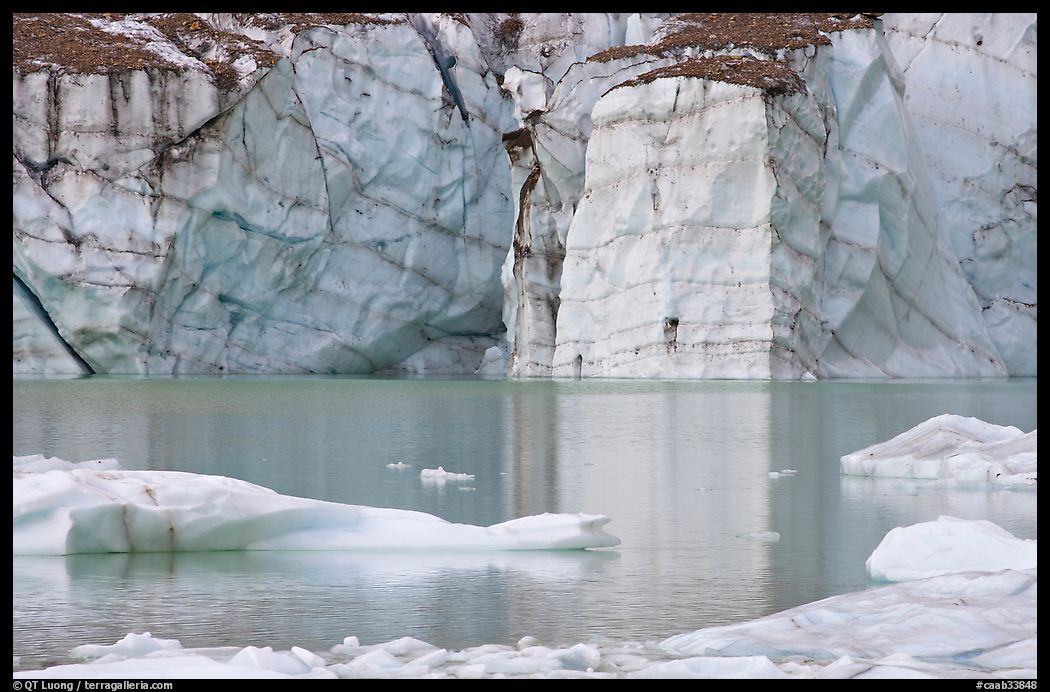
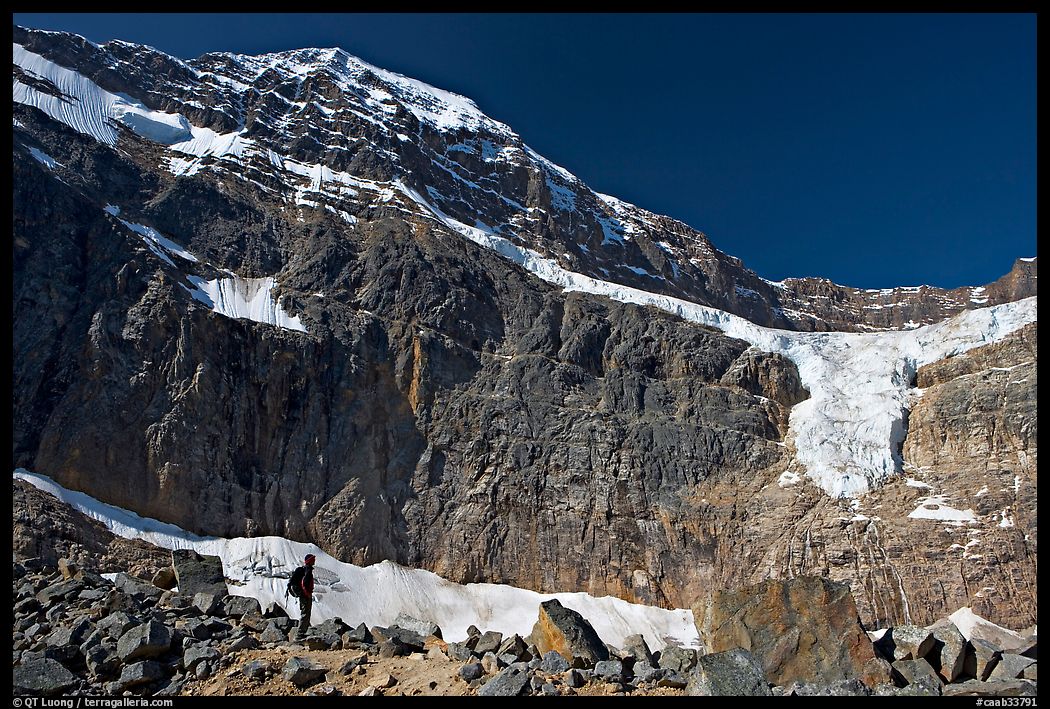
Forming the backbone of North America, the Rocky Mountains have long stood as an emblem of wilderness, with Glacier National Park in Montana dubbed the “Crown of the Continent.” Yet north of the border lies an even more spectacular expanse, protected within four contiguous Canadian Rocky Mountain parks. Glacier delivers vertical drama, not because its peaks are higher, but because the Going-to-the-Sun Road grants visitors direct access to towering walls and deep valleys. Its namesake glaciers, however, are nearly gone—reduced to remnants of what once numbered more than a hundred. Of the Canadian parks, Banff National Park is the most famous and visited, thanks to its early establishment, extensive infrastructure, and postcard landmarks like Lake Louise, Moraine Lake, and Peyto Lake. Banff still retains significant icefields, but Jasper National Park surpasses them by far. Anchored by the Columbia Icefield, Jasper reminds visitors that this is still, quite literally, an Ice Age landscape. The largest of the Canadian Rocky Mountain parks, Jasper feels less developed and less visited, its sheer scale offering a different register of awe.
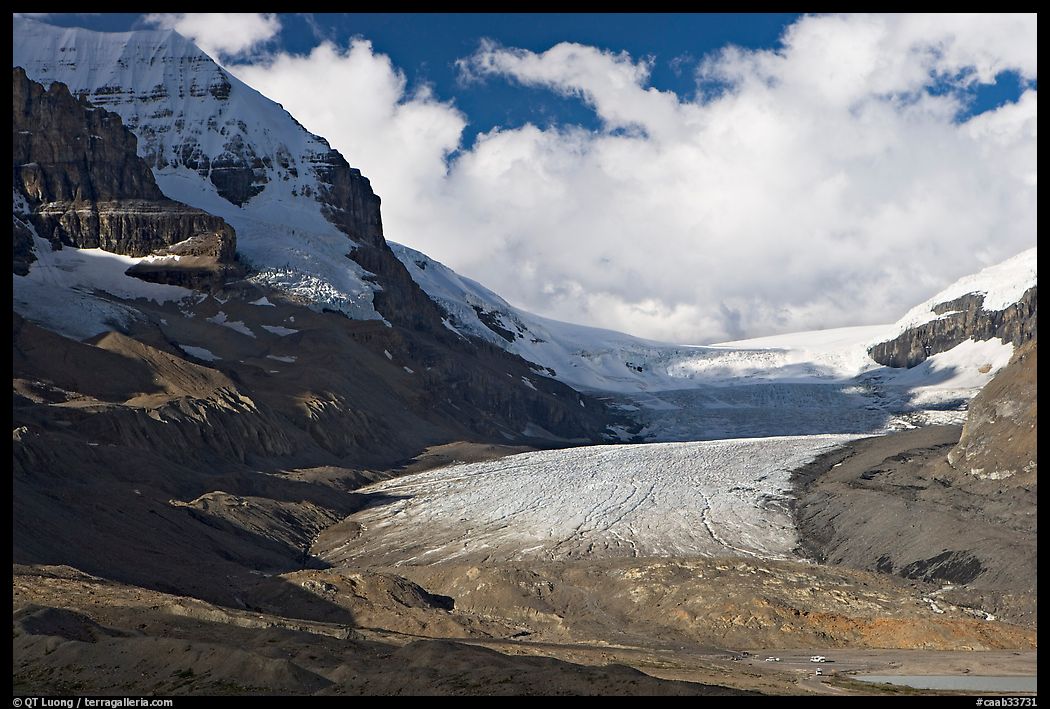
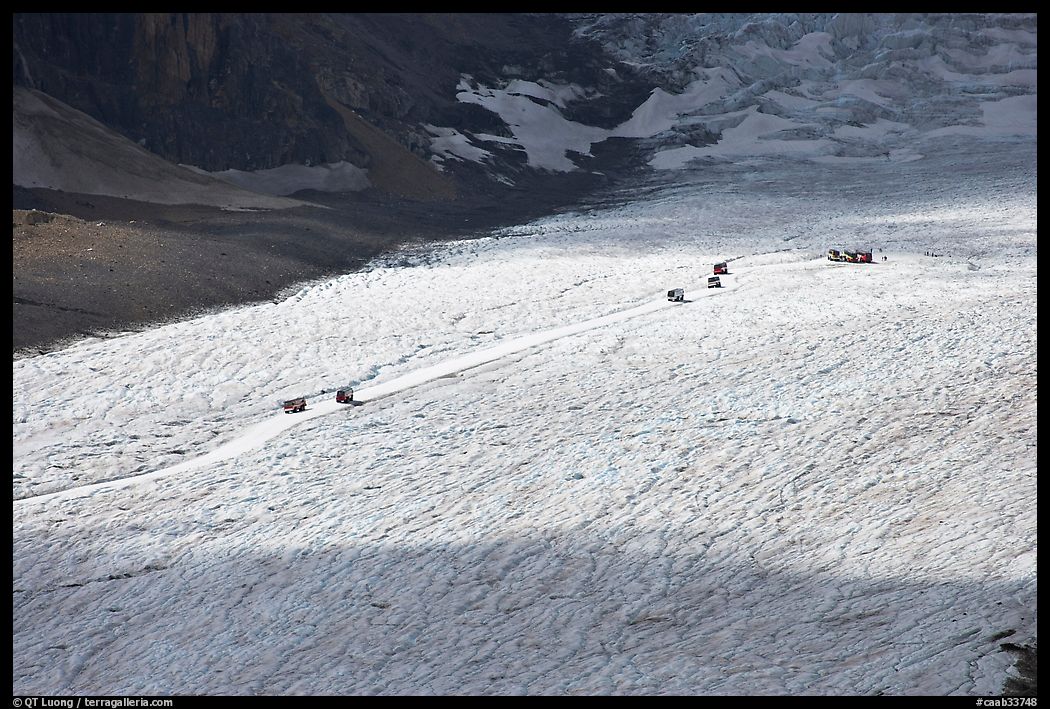
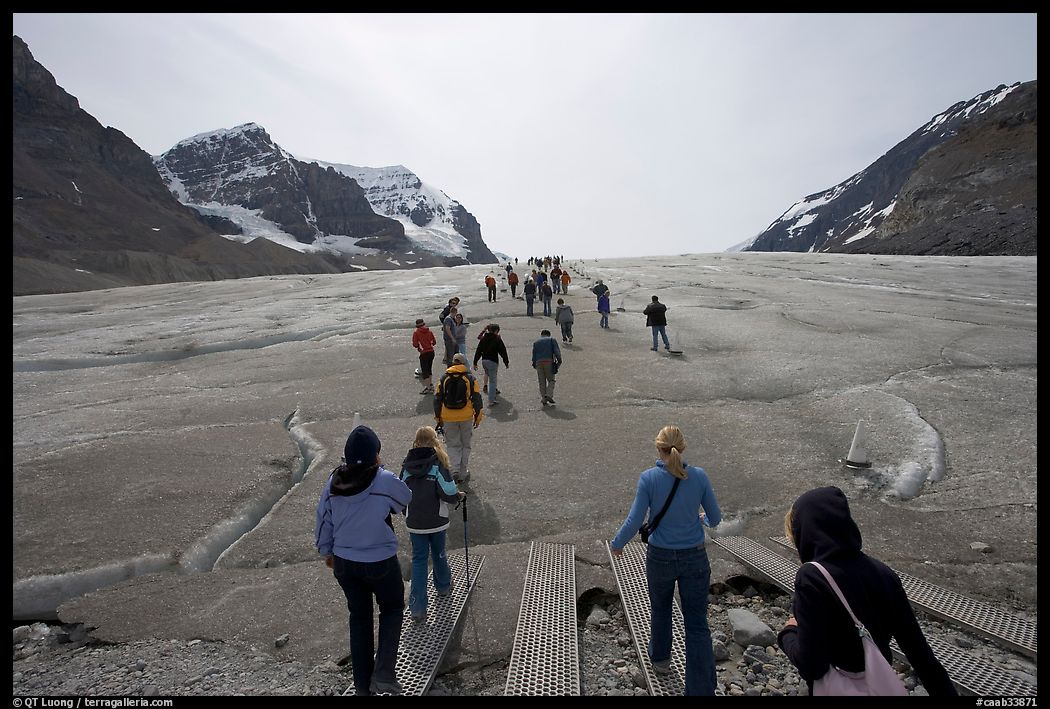
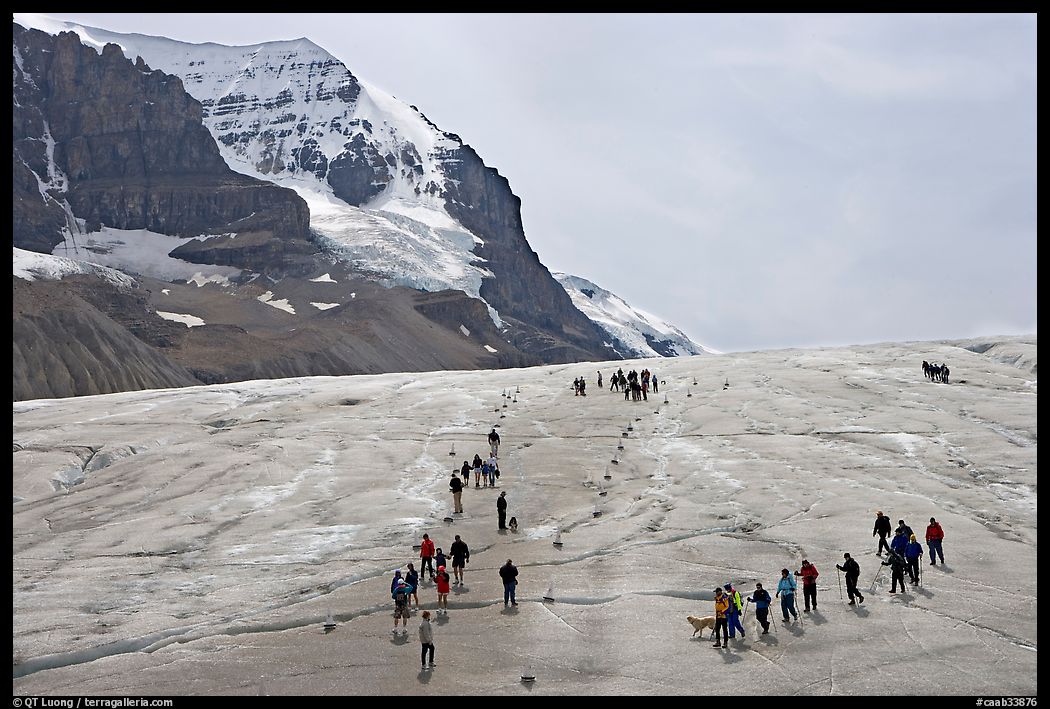
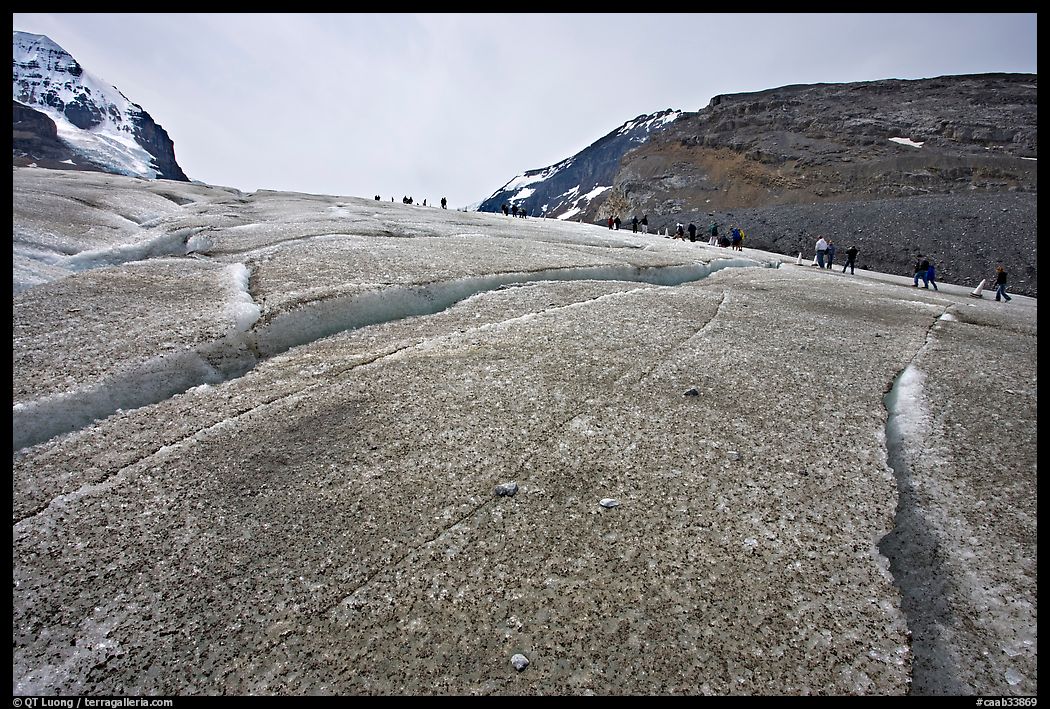
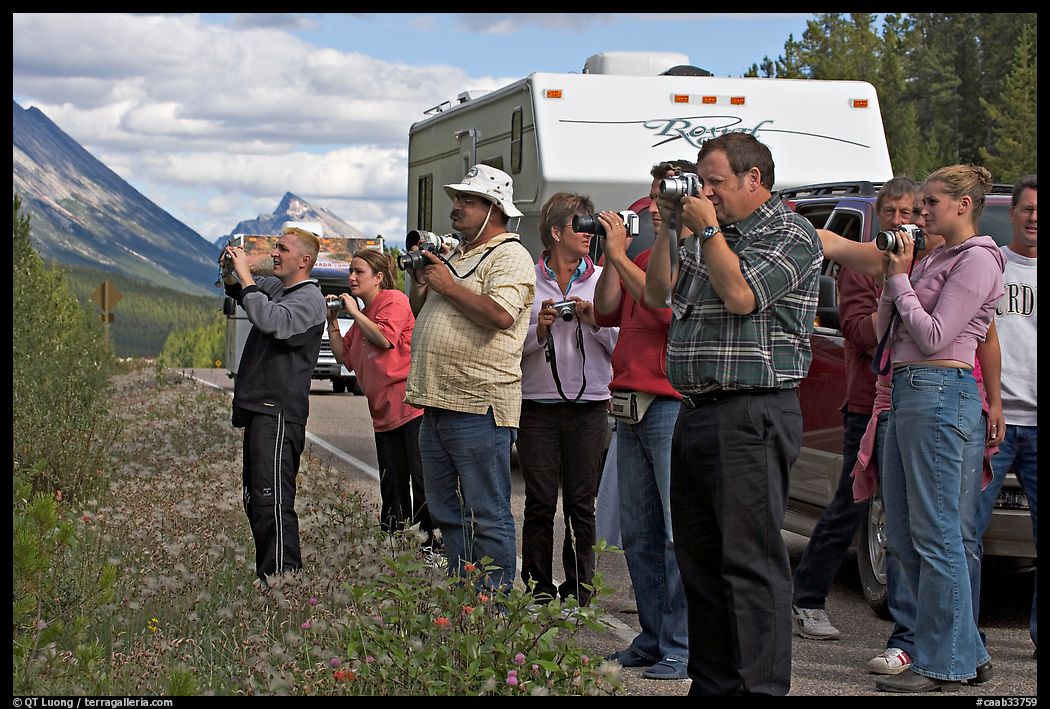
My encounters with Jasper National Park are split across time. In the early 1990s, I traveled there in winter multiple times to climb frozen waterfalls along the Icefields Parkway. As I retuned in the summer of 2005, my main tools were no longer ice axes, but rather a pair of cameras, with an early full-frame digital camera complementing my trusty 5×7 inch view camera. I set out to make the same kind of landscape photographs I had created in the U.S. national parks. It had been suggested that Canadian parks could serve as a natural extension of the Treasured Lands project, and Jasper’s immensity and diverse scenery certainly fit that mold. Lakes, dramatic peaks, glaciers, icebergs, waterfalls were places made for large-scale landscape photography. But one set of photos from the Athabasca Glacier stood apart: people scattered over ice, human scale incongruously set against geological scale. At the time I didn’t think of them as more than curiosities. Only later did I realize they pointed toward a different way of seeing national parks: one less about pure scenic wonder and more about how we represent, stage, and experience nature.
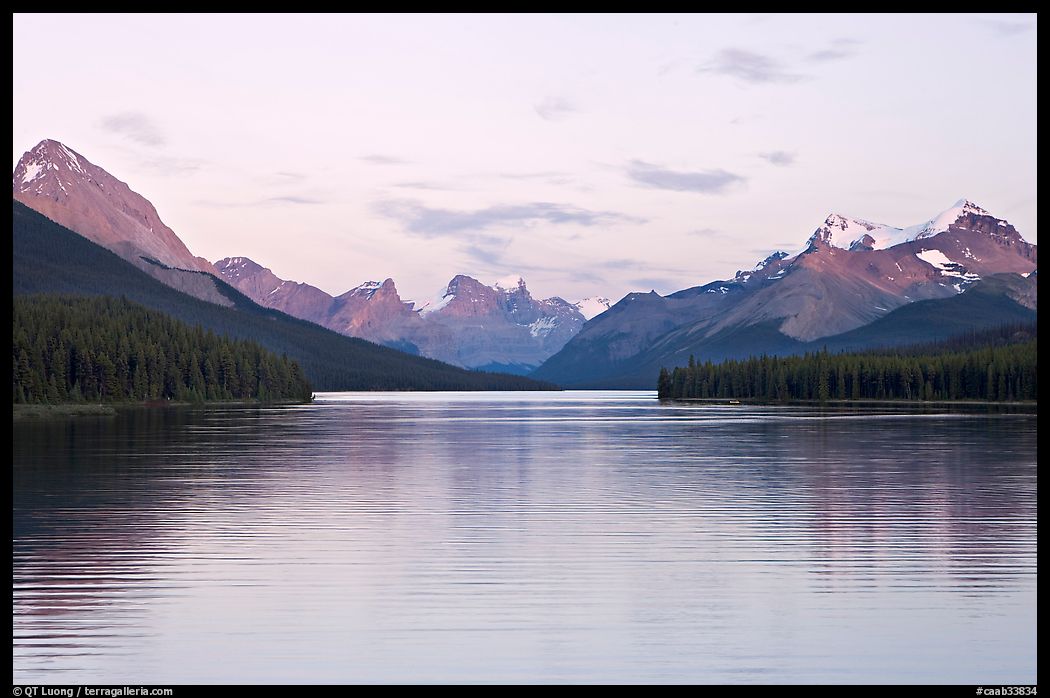
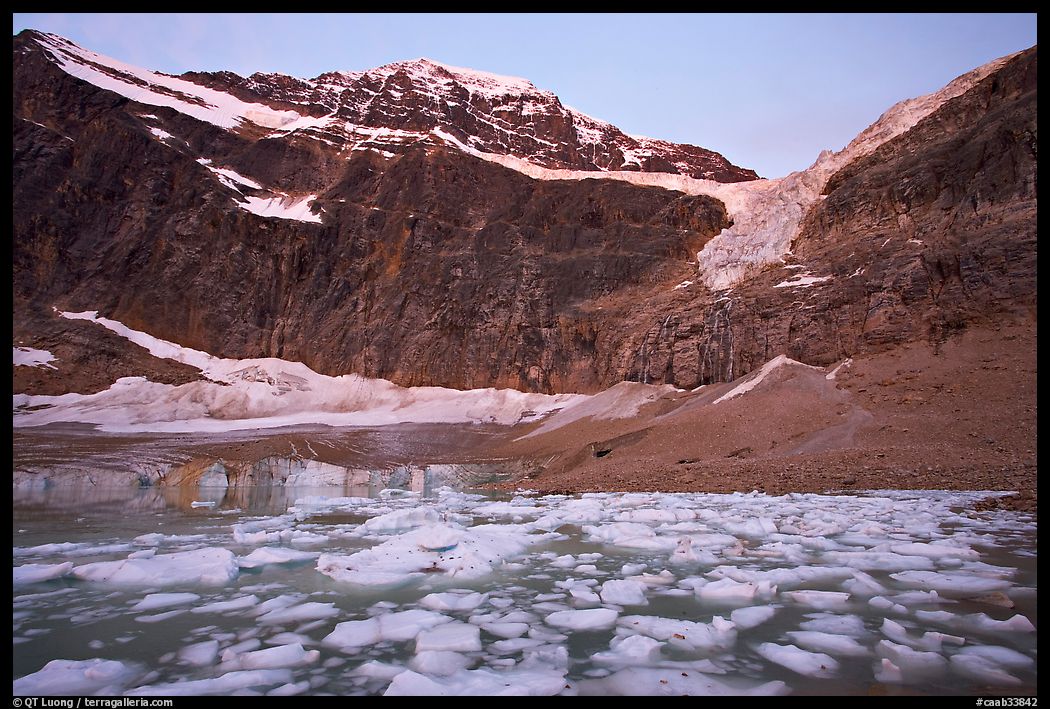
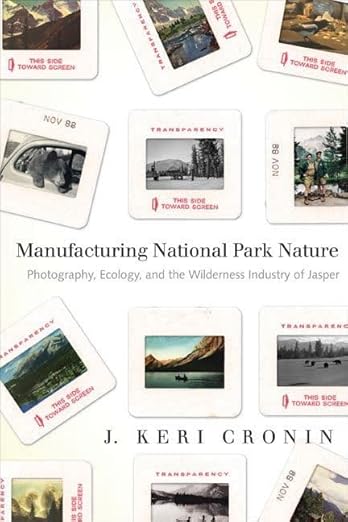
In the late 2000s, my exposure to William Cronon’s critique in The Trouble with Wilderness forced me to question foundational assumptions: that wilderness is a separate, pristine domain; that nature’s truest form is remote; that human presence is inevitably tainting. His work pushed me toward valuing wonder in places close to my home, to recognizing human histories in landscapes, and to respecting ecological realities rather than idealized myth. Still, there was more missing: how nature is made visible. It’s not enough to say that wilderness is a myth. We need to see how that myth is reinforced. That gap is what J. Keri Cronin’s Manufacturing National Park Nature (2011) helps fill. The book uses Jasper National Park as its primary case, providing specific archival illustrations, but its arguments resonate broadly. Cronin demonstrates that “national park nature” is not something passively encountered but actively produced. By this term, she means a system of visual organization—ways of seeing shaped by photography, tourism promotion, and cultural values—that determines what counts as “nature” in the parks. Within this system, certain images are elevated to canonical status: sweeping vistas emptied of people, charismatic wildlife portrayed as emblems of wilderness, recreational activities framed as solitary communion. At the same time, other realities are suppressed: roads, lodges, signage, human–animal conflict, Indigenous presence, and the infrastructures that make visitation possible. What emerges is not simply nature as it exists on the ground but a carefully curated construct—an aesthetic and cultural product manufactured through photographs, brochures, and promotional imagery that both reflect and prescribe how parks are understood. Wilderness, recreation, and wildlife are not timeless truths but constructs within “national park nature,” each an axis along which representation is organized. Seen this way, national parks are not only ecological spaces but aesthetic ones. Their look—the way vistas are framed, wildlife depicted, and recreation staged—is already curated, more like an exhibition than untouched wilderness.
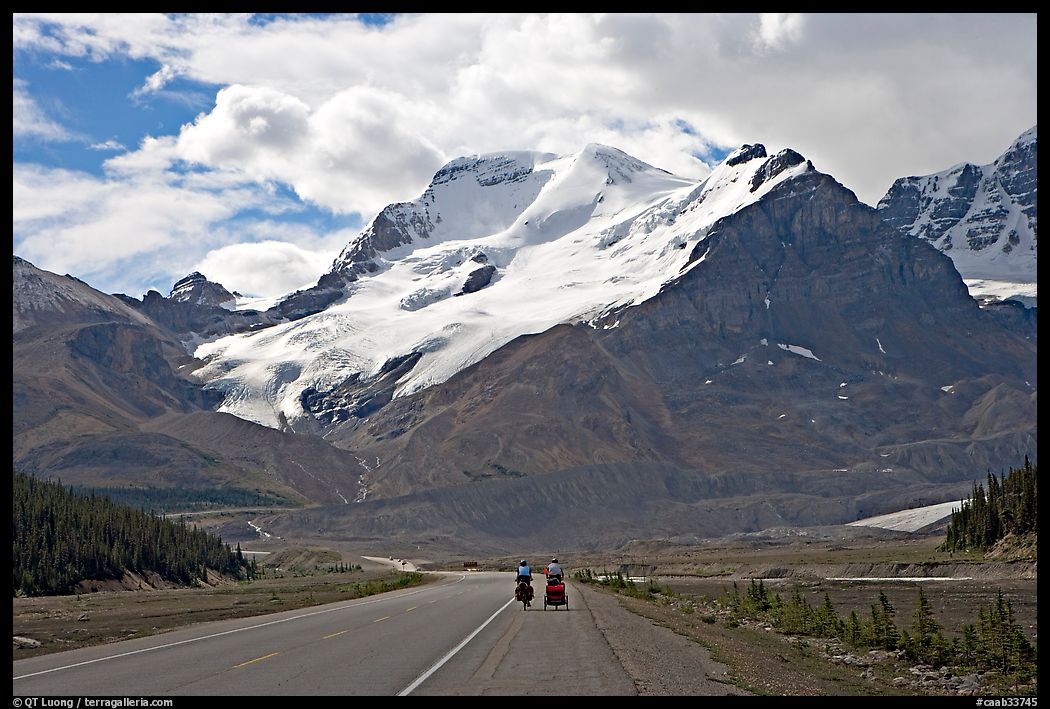
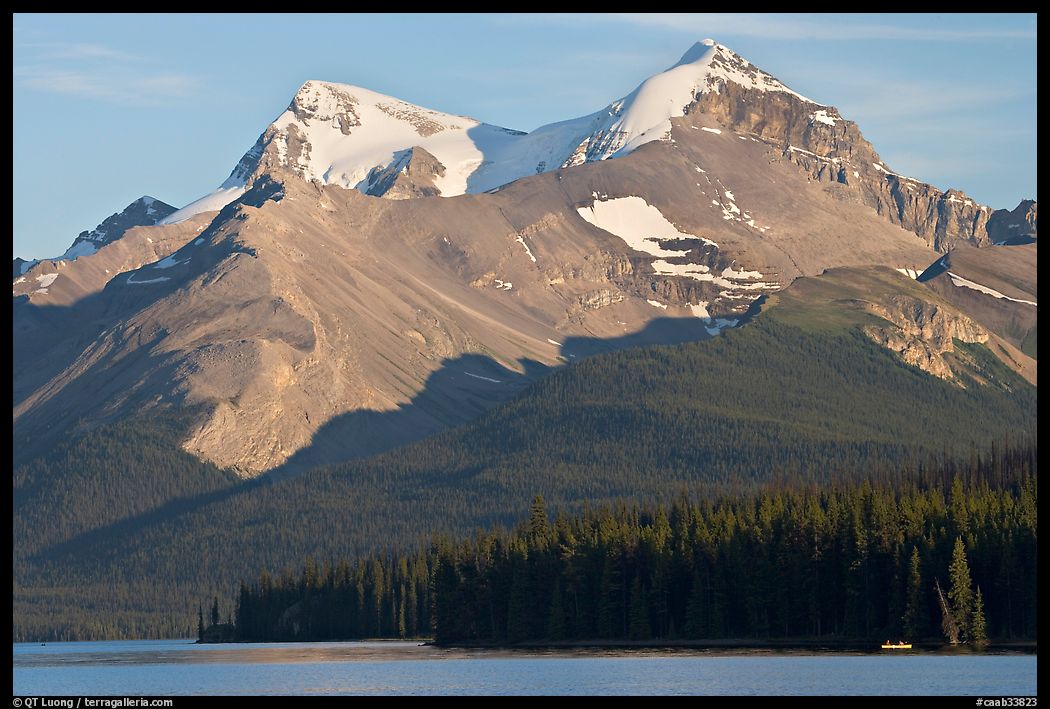
The book has affected my work profoundly. The photographs I made of the Athabasca Glacier now feel less like odd departures and more like early signals. Cronin shows how promotional images of the Columbia Icefield routinely emphasize its scale and purity while leaving out the very infrastructures that make it accessible. My own pictures inverted that convention: not only did they show crowds scattered across the ice, but also the distant lines of ice-coaches and parking lots, dwarfed by the glacier yet unmistakably present, and even the Canadian flag framing the scene. Together these elements expose what Cronin calls the gap between what is pictured and what is concealed. If official imagery manufactures a vision of pristine wilderness, my photographs insist on the lived reality—a landscape where national symbolism, mass tourism, and the spectacle of ice are inseparable. They still rely on the scenic tradition, depending on scale, light, and spectacle, but they also critique it by insisting on what official imagery leaves out. The tension between continuity and critique has become central to how I now think about photographing parks. My subsequent major long-term project America’s Best Idea, which I began in the same year that Cronin’s book was published, 2011, and is still in progress, owes much to her work—not because of the specifics of what gets included or excluded in images, but because she made clear that national parks are mediated spaces. Her analysis provided the conceptual tools to recognize that parks are never experienced directly or purely, but always through layers of representation, infrastructure, and cultural framing. The park infrastructure— visitor centers, signs, roads, amphitheaters—in America’s Best Idea is no longer treated as distraction to be minimized but as a central feature, making visible the apparatus by which “nature” is mediated.
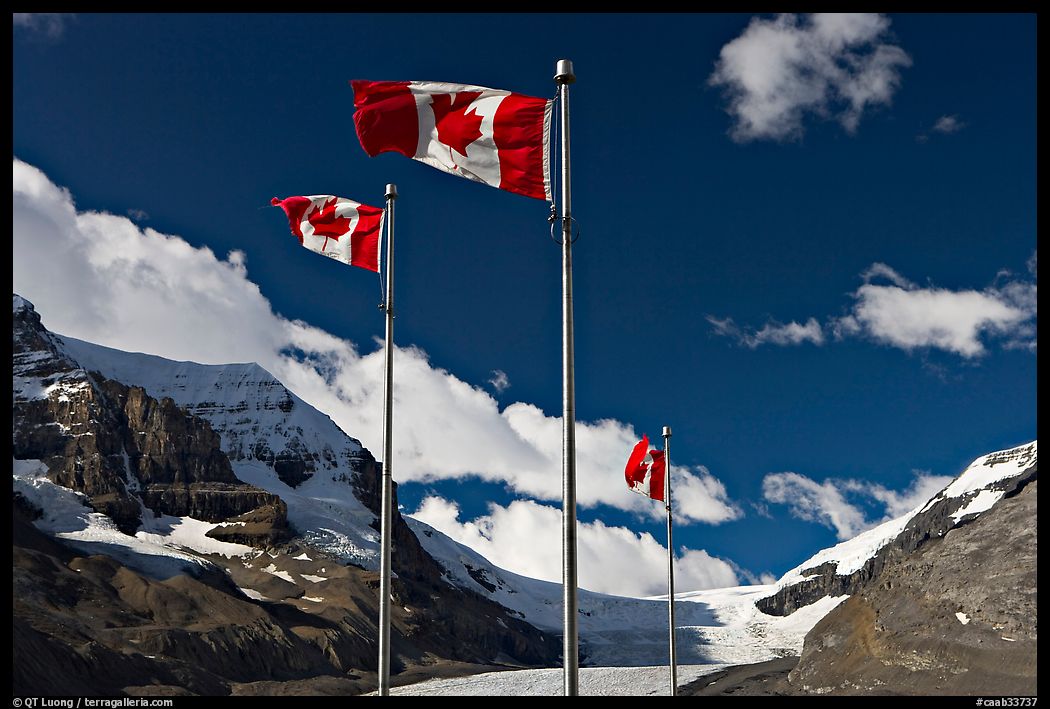
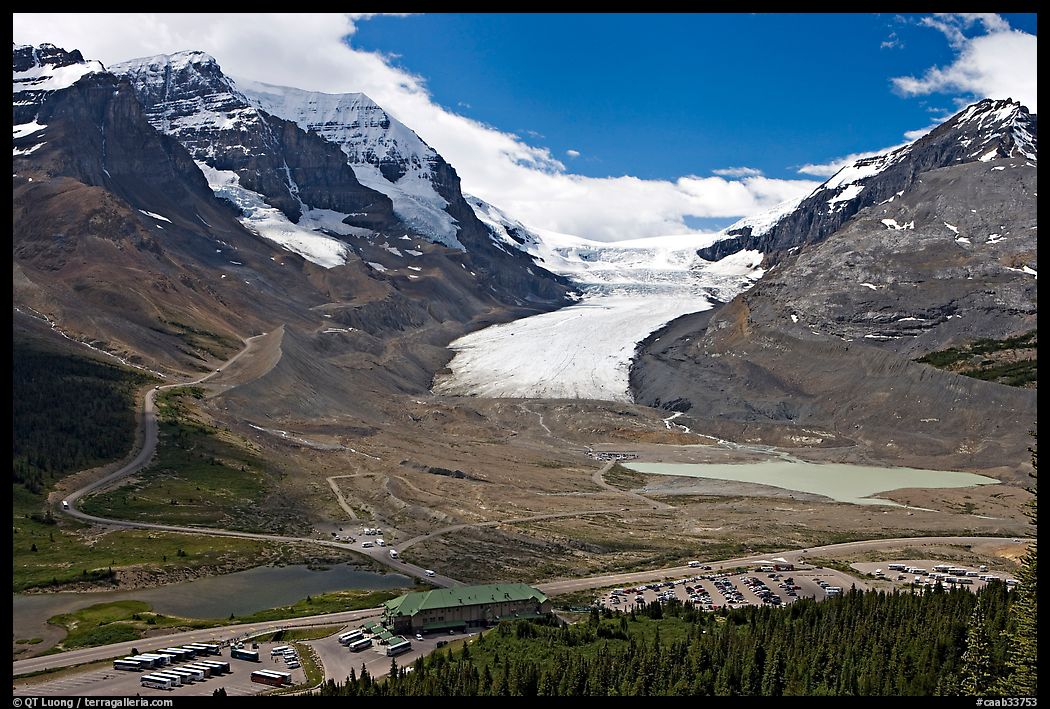
National parks are more than geography; they are cultural objects, aesthetic modes, and institutions with histories. Photography has always been central to that construction—not a neutral mirror, but a force that shapes what we believe these places are. As Cronin shows, camera images are especially powerful because they appear objective. In Jasper, illustrated guidebooks, postcards, and tourist snapshots created a specific way of seeing the Canadian Rockies: vast, untouched, and pristine. Pictorial conventions taught visitors to frame out other tourists and to privilege empty peaks over parking lots. Once developed, put into albums, and circulated among friends, these images further solidified the myth. What is left out—the crowds, the infrastructure, Indigenous histories, the management of wildlife—matters as much as what is shown, because these absences shape expectations, policy, and public imagination. To photograph parks is therefore to take part in their ongoing manufacture, a responsibility that calls for awareness of visual conventions and a willingness to reveal the complexity that lies behind them. Authenticity may not rest in the absence of human presence but in acknowledging the entanglements—natural, cultural, and constructed—that truly define “national park nature.” Seen in the larger history of photography, Cronin’s book makes clear that to photograph parks today is to take part not only in conserving their images but also in questioning how those images are made.
Manufacturing national park nature: photography, ecology, and the wilderness industry of Jasper by J. Keri Cronin, foreword by Graeme Wynn. UBC Press, 2011.
Read the foreword and introductory chapter

Key themes:

Grounding National Park Nature (Chapter 1).

  • Definition of “National Park Nature” — what Cronin means by it: it is a way of seeing shaped by photography, tourism, and cultural values.
  • Visual culture and national symbolism — how particular views of Jasper have been circulated via postcards, paintings, rail-tourist promotions, stamps, etc., and how this contributes to national identity.
  • The gap between the pictured and the real — what gets shown in images (flora, fauna, geology, visual aesthetics) vs what is often concealed: human infrastructure, tourism impacts, management, Indigenous histories.
  • The role of photography specifically — how photographic images, as widely consumed objects, shape expectations, frame values, and help create conventions of what “wilderness” or “nature” should look like. It is not about objective truth but mediated seeing.
“Jasper Wonderful by Nature”: The Wilderness Industry of Jasper National Park (Chapter 2)
  • How Jasper has been promoted as “wilderness,” including the co-construction of wilderness through marketing, railroads, rail tourism, early accommodations, lodge development.
  • The narrowing of what kinds of wilderness are acceptable in imagery: large, dramatic, untouched views; what is excluded (roads, lodges, signs, civilization) to sustain the myth.
  • Tension between “improvement” (infrastructure, tourism amenities, roads) vs preserving the “wild” or aesthetic symbols of wilderness.
An Invitation to Leisure: Picturing Canada’s Wilderness Playground (Chapter 3)
  • Leisure and recreation as part of the “wilderness experience”: how images of canoeing, boating, lodges, trails, scenic drives are framed so as to appear harmonious with wilderness rather than disruptive.
  • The aestheticization of leisure: infrastructure styled to feel “natural”; signs and built objects made unobtrusive; landscape made picturesque even when modified.
  • The role of access: roads, trails, automobile tourism, lodging, etc., how they are shown (or hidden) in visual material to preserve a sense of “wildness” while enabling more visitors.
“The Bears Are Plentiful and Frequently Good Camera Subjects”: Photographing Wildlife in Jasper National Park (Chapter 4)
  • Wildlife as image commodity: which animal species are chosen for photographs (bears, elk, mountain goats), how they are staged.
  • Omissions: conflict, management, human–animal interactions, animal behavior influenced by tourists, feeding, danger — these are largely absent or downplayed.
  • Wildlife in relation to expectations: how visitors expect to see wildlife, what images reinforce, what is implied about wildness, and what these expectations do to park management and experience.
Fake Nature (Chapter 5)
  • Curated or constructed nature: demonstration gardens, interpretive sites, exhibits, dioramas, and other “fake nature” forms that are publicized as close enough to wild nature.
  • Authenticity and performance: how images and built displays perform what naturalness is expected to look like; how “fake nature” is sometimes indistinguishable in promotional materials from “wild nature.”
  • The implications: implications for visitor expectations, environmental understanding, and conservation policy — the role of these constructed forms in shaping public ideas of what nature is, what needs protecting, and what counts as real.
Read the whole story
leisurist
132 days ago
reply
Share this story
Delete

Two Republican Congresspeople Call For Institutionalization Of Transgender People

1 Comment

Erin In The Morning is a reader-supported publication. To receive new posts and support my work, consider becoming a subscriber.

In the wake of Charlie Kirk’s killing—committed by a suspect who notably was not transgender—conservative leaders have seized the moment to escalate their war on LGBTQ+ people. Vice President JD Vance and Stephen Miller used the death to demand the dismantling of NGOs critical of Kirk. Far-right influencer Matt Walsh openly called for executions of those he branded “LGBTQ+ terrorists.” And now, two sitting members of Congress have crossed a new threshold, explicitly calling for the institutionalization of transgender people—an escalation even by today’s standards.

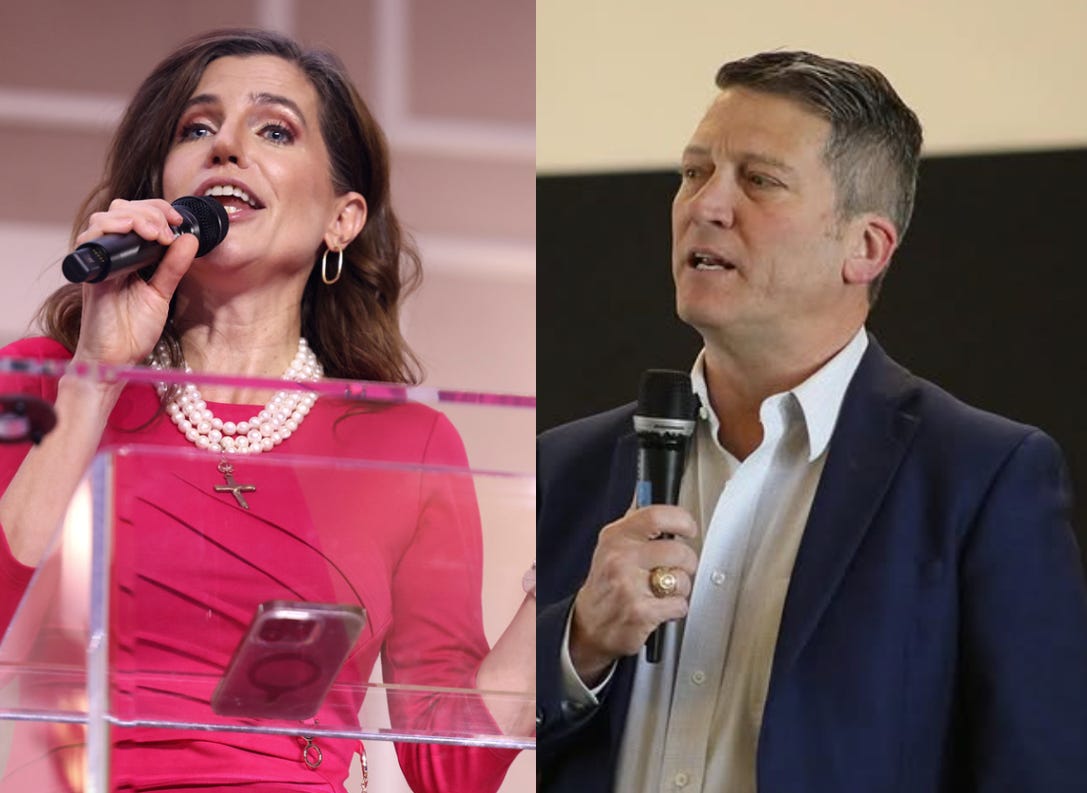
First, South Carolina representative Nancy Mace, who has a history of vehement opposition to transgender people in congress, called for the institutionalization of transgender people in a street interview where she hurled slurs at the community. She first stated of the shooter’s partner, “It was a transgender… It was a tranny.” When she was asked how she would feel if she were called names the way she calls transgender people, she said “these people are violently ill and should be in a straight jacket with a hard steel lock on it.”

Then, on Newsmax, Representative Ronny Jackson, former White House Physician and Texas Congressman, was asked if “bringing back mental institutions could be on the table.” He responded by saying that transgender people have “legitimate psychiatric issues… we have to do something about this, we have to treat these people, we have to get them off the streets and we have to get them off the internet and we can’t let them communicate with one another. I’m all about free speech, but this is a virus. This is a cancer that is spreading across this country.” He also stated in another portion of the interview that transgender people are “a group of domestic terrorists” that “have been bred by the progressives and the liberal media.”

The rhetoric among far-right influencers and financiers has only intensified since the killing of Charlie Kirk. Elon Musk amplified a post to 21 million people on his platform calling for transgender women to be institutionalized “for a long time, some of them indefinitely,” adding himself that “the truth is so awful that they murder to keep the lie” of their gender identity. Laura Loomer urged that the transgender rights movement be declared a “terrorist movement.” Matt Walsh labeled the killing “left-wing LGBT terrorism” and went further, demanding that “the terrorists and their helpers and funders” be “arrested, prosecuted, and put to death.”

These calls don’t emerge in a vacuum. Institutionalization was once a favored tool for erasing transgender people from public life, a way to disappear them rather than recognize their humanity. For sitting members of Congress to revive that rhetoric marks a dangerous escalation. The parallel is just as clear abroad: in Russia, LGBTQ+ movements have been designated “extremist” to justify bans on supportive NGOs and erase entire communities. That is the same playbook Vice President JD Vance and President Trump appeared to nod toward this week—Vance on the Charlie Kirk Show, Trump in a press conference—when they floated targeting NGOs under RICO charges for political dissent.

There is no evidence that transgender people are “violent” or “terroristic.” The data is unambiguous: the vast majority of killings in the United States are carried out by cisgender men. Even in the case of Charlie Kirk’s death, a cisgender white pulled the trigger. Yet in the rush to manufacture a narrative, the far right seized on the fact that his roommate and romantic partner was reportedly transitioning—ignoring that she refused to destroy evidence and instead turned text messages over to police. That detail doesn’t fit the story they want to tell. Instead, they continue to pin every act of violence they can on transgender people, exploiting a tragedy to escalate their campaign of fear and extremism.

Erin In The Morning is a reader-supported publication. To receive new posts and support my work, consider becoming a subscriber.

Read the whole story
leisurist
139 days ago
reply
If only they cared as much about the Epstein files or preventing gun deaths as they did about trans folks.
Share this story
Delete

The contents of "trixie" are now with the Debian Images team, who are building and testing all the .iso files you'll be able to download once the release is ready. #debian #debian13 #trixie #ReleasingDebianTrixie

2 Comments

The contents of "trixie" are now with the Debian Images team, who are building and testing all the .iso files you'll be able to download once the release is ready. #debian #debian13 #trixie #ReleasingDebianTrixie

Read the whole story
leisurist
177 days ago
reply
Upgrade instructions were excellent and it went very smooth on my laptop!
Share this story
Delete
1 public comment
jepler
178 days ago
reply
Earth, Sol system, Western spiral arm

Trump Stabs Prominent Montana Supporter With Tariff Knife

3 Comments

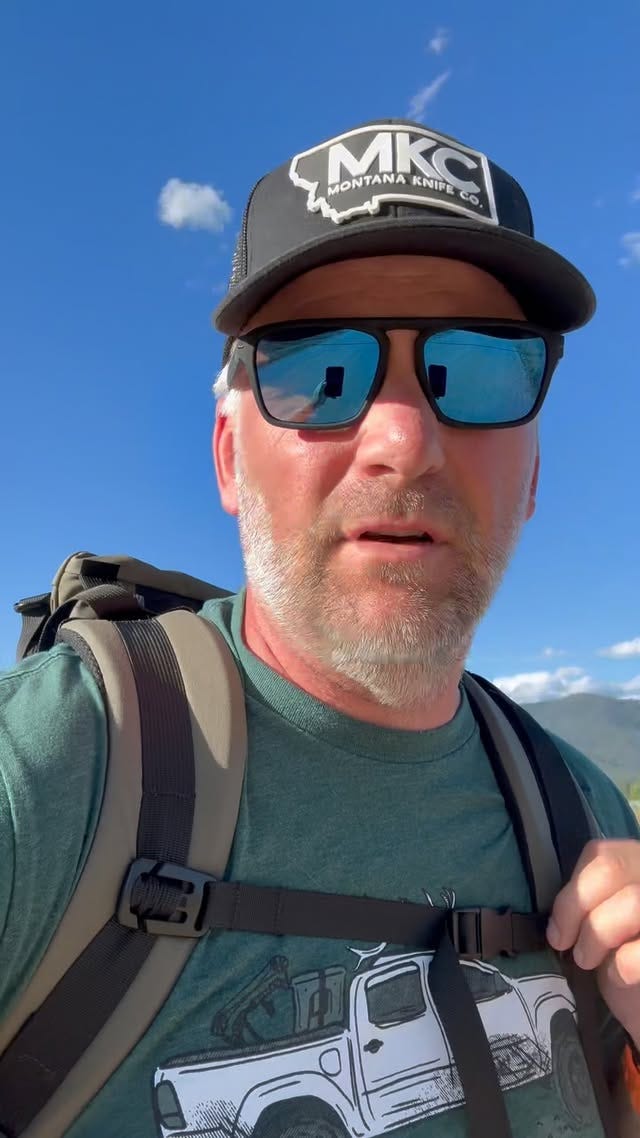
Josh Smith is an entrepreneur, a right-wing podcaster, a CEO, and one of Donald Trump’s most ardent and outspoken supporters. And Josh Smith ain’t holding back; he’s “pissed” because he just figured out that Trump’s “dumb as it can get” tariff policies are stabbing his American small business and jeopardizing the working people he employs.

Smith is proud of his company, and he should be. Montana Knife Company, which he founded in 2020, is a classic entrepreneurial success story growing like a rocket ship during the presidency of Joe Biden. The up-from-the-bootstraps business started in Josh’s garage, now employs more than 80 people, and produces high-quality products here in America. MKC builds knives that are coveted by serious hunters like me; the sort of blades that will someday be passed down through generations.

Like many small business entrepreneurs, Smith is a risk taker, too. In 2024, at about the same time Donald Trump was campaigning on bold but unhinged promises to institute dangerously hairbrained tariffs, Smith, who was then 44, decided to risk of further business expansion with a plan to hire up to 70 more employees and build a shiny new 51,000 square foot facility just west of Missoula complete with lots of new machinery and steel, much of it imported.

Even as almost every credible economic expert warned of the danger and lunacy of Trump’s tariff promises, Josh either did not believe it or did not grasp Trump’s complete lack of economic acumen, and throughout the campaign, Josh Smith never wavered from his long and vocal cheerleading for all things MAGA. Just as he had for several years prior, Smith continued the use of his “The Josh Smith Show Podcast” as part marketing tool and part right-wing megaphone for his personal politics, regularly treating guests like Tulsi Gabbard, Donald Trump Jr, and Republican Senator Tim Sheehy to long, MAGA-fawning conversations. In April 2024, Smith even posted about personally meeting Trump, and then, in January, he hosted a well-attended inaugural watch party in D.C.

Even well into 2025, when Trump’s tariff bombs were starting to explode, Smith kept up the cheerleading, mocking companies that added tariff surcharges to their invoices and posting a social media video in which he held up an egg, signifying that tariffs would impact his company and his workers exactly ZERO, the same as a goose egg. Smith then went on in that video to repeat Trump’s idiotic talking points: “We’ve been preaching this all along, we are American-made, buy American, and you don’t have to worry about this shit.”

But it turns out that the experts were right, Josh and Trump were wrong. Smith and his employees do, in fact, have to worry about this shit. Months after his first mocking video, as Josh came to terms with the tariff charge increases for his new factory, he was first shocked and then angry. A few days later, he posted a new video in which he states:

“Alright, Donald Trump, I’ve got a bone to pick with you and your administration…I’m a bit pissed about your tariffs…why am I paying tariffs on that manufacturing equipment, it makes no sense, it’s about as dumb of a government policy as government policies get…you can not buy that equipment here.”

Josh also rightfully asks,

“Why are we talking so much about Epstein, no granted he’s a piece of shit and I am also not happy with Trump about that…Maybe call me Mr Trump.”

CLICK ON THE FOLLOWING VIDEO TO WATCH:

But Smith was not done, following that post and in his most recent podcast episode entitled “Tariff This”, Smith further detailed the exact impacts of Trump’s policies on people like him. The exact sort of impacts that will slow down job growth and American manufacturing. The exact sort of impacts that hit working people and don’t impact billionaires like Trump or Bezos. This is the posted episode description:

This episode of The Josh Smith Show dives into the messy and current world of tariffs and how they’re hitting businesses Montana Knife Company hard. Josh breaks down the real impact: a 50% tariff on European steel, potentially the only option after Crucible Technologies went bankrupt. Last year, a 36% tariff would’ve added over half of a million dollars to MKC’s steel bill alone. Then there’s the German-made bevel grinders, essential for their new 51,000 sq. ft. Montana facility, facing 30-50% tariffs that could turn a $400,000 machine into $600,000. Josh argues tariffs on finished goods like knives make sense, but taxing raw materials and equipment unavailable in the US? That’s hurting the very businesses trying to bring manufacturing back. From Niagara Steel rolling European slabs in New York to MKC hiring local Montanans and engineers, these policies risk slowing growth and killing jobs. Josh calls for smarter, nuanced policies and urges leaders to talk to business owners to avoid wrecking the companies they claim to support.

A few days later, on Aug 7, Trump, apparently immune to the pleas of small businesspeople like Josh Smith, or the red warning lights of the drastic downward revision in jobs numbers, increased tariffs again at midnight and then celebrated by posting this on social media:

I don’t want to dunk on Josh, and I damn sure do not want all the good people who work at MKC to suffer. But I do think we should demand better of people like Josh Smith. He’s plenty smart enough to have known that these Republican MAGA policies would be bad for Americans. He can see that his Republican representative and senator are enabling this lunacy, and yet he refuses to say he’ll vote against them. It’s hard to take him seriously if he won’t even vote against the people causing this pain.

We can all see that this is bad for working people because tariffs impact the goods that working people need and the jobs they depend on. Just like everything else Trump does, this regressive policy will help Billionaires and hurt small businesses. I’m glad that Josh Smith sees the truth on tariffs now, but the same truth is equally evident on health care, tax breaks for billionaires, and gutting public lands to benefit big corporations.

Welcome to the new morning, Josh - breathe deep, there’s a lot more coffee to smell.

Share

Read the whole story
leisurist
178 days ago
reply
I never thought the leopards would eat my face...
Share this story
Delete
1 public comment
freeAgent
177 days ago
reply
Instead of Josh's idea of applying tariffs to only unfinished goods, I propose we apply tariffs only to Trump voters and supporters. These patriotic Americans should show us how great they're made by tariffs and thereby convince the rest of us to join them in the MAGA promised land.
Los Angeles, CA

Living the Grand Canyon

1 Share

Part 1 of 3: To be continued

On a photography expedition such as the one I co-led from May 1 to May 11 this year, participants come to capture the Grand Canyon’s awe-inspiring landscape and spend ten days immersed in its depths. But the Grand Canyon, like other national parks, is not just a wilderness. It is also a place of people—those who work, journey through it, and who, in the process, have made it the special protected place that it is today.

A river trip through the Grand Canyon is not just an adventure; it is a shared experience. For ten days, we lived in close proximity, helping each other with the myriad tasks required by life along the river. Once the raft was beached, camera bags, tripods, overnight bags, tents, sleeping kits, mattresses, chairs, tables, and kitchen supplies all had to be unloaded. This was done most efficiently by forming a human chain, passing objects from hand to hand. That was the extent of the work required, as the river guides managed everything else with practiced efficiency. The camaraderie we developed extended beyond our group. Each time our faster motorized raft overtook an oar-powered party, our guides paused to exchange greetings and plans, and participants from both groups waved cheerily. There are no reservations for campsites along the river, but rather than competition, there is collaboration. Our guide, a seasoned professional, considered it poor form to race ahead of oar parties struggling against headwinds just to claim a site. Fortunately, other groups understood that photography goals took us to a specific destination, and with one exception, we always secured our preferred camps.

What makes this journey extraordinary is not only the scenery but the simpler rhythm of life it enables. Unlike remote wildernesses into where cell towers now often reach, the steep canyon walls block all signals. Disconnected from the modern world, we found ourselves immersed in a quieter one. Aside from the fairly quiet hum of the raft’s motor, the only sounds were the roar of the rapids, the splash of the river, and the voices of our companions. No traffic, no alerts, no background noise. Even time itself lost relevance, replaced by a natural cadence shaped by daylight. On such a trip, we do not simply see the canyon—we live and breathe in it.

The day began with a coffee call at 5:30 a.m.—announced by a guide blowing a conch shell, which requires surprising skill to sound properly. After breakfast, we’d break camp, pack our gear, and load the boat while watching for morning light. We were on the river by 8 a.m., typically stopping for hikes and lunch before arriving at our next camp by mid-afternoon. That left time to walk, photograph, or simply sit in the quiet before dinner around 6:30 p.m. The meals, prepared from fresh ingredients, were unexpectedly excellent for a trip in the wilderness. The river-running industry has refined its logistics to an art, including handwashing and dishwashing stations, toilets, and food storage. By 8 p.m., the canyon went dark. Those not venturing out for night photography were happy to retreat into tents under the stars. One night, when I offered instruction at 2 a.m. – because of the near-full moon that set at 4 a.m. – only one participant showed up.

Although nearly five million people visit Grand Canyon National Park each year, about 25,000 raft the Colorado River through the canyon. Of those, over three-quarters are on guided commercial trips such as ours, which was guided by Ed and Finger from Arizona Raft Adventures (AZRA) with the assistance of Doug. Private permits are highly competitive, with fewer than one in fifteen applicants receiving a permit via lottery. Add to that the logistics and whitewater skills required, and it’s clear that such a journey is not easily accessible. That said, a guided trip remains demanding—but manageable. I still lost weight despite eating more than I usually do. Most people can enjoy it: I was the second youngest in our group, and our oldest participant was a 78 year old. Not everybody was in great shape, but we all made it. Despite the high traffic relative to other backcountry rivers, the campsites were remarkably clean—thanks to a strict “carry-it-out” ethic and careful toilet management. The National Park Service enforces tight control over the river corridor: no more than 150 people are permitted on the river each day, and no individual is allowed more than one trip per year.

That scarcity makes the experience even more resonant, especially considering the river’s symbolic weight. Although the Colorado River through the Grand Canyon is arguably the most iconic river in the country, it is neither designated as a Wild and Scenic nor part of the Wilderness system. And yet, it played a central role in shaping modern environmentalism. Although relatively few have floated the river, those who have left an outsized mark. In the 1960s, the U.S. Bureau of Reclamation proposed two dams—one in Marble Canyon, one in Bridge Canyon—that would have flooded parts of the river corridor. The structures were designed to be invisible from the South Rim overlooks to avoid detection by tourists. But the rise of river-running tourism changed the political landscape. Ironically enabled by the controversial Glen Canyon Dam upstream, this growing community of river travelers had come to see the canyon not only from above, but from within. The Grand Canyon was not only its iconic vistas, but the full river stretch between Lee’s Ferry and Lake Mead. River runners formed an alliance with environmentalists. The cornerstone of the successful campaign to stop the dams was the Sierra Club’s 1964 book Time and the River Flowing. Combining François Leydet’s impassioned prose with photographs by Philip Hyde and others, the book argued that the Grand Canyon was not just landscape. It was a living river. The campaign’s success in 1968 was a watershed for the modern environmental movement—proof that public imagination, art, and activism could protect even the most threatened places. The Grand Canyon dam fight was more than a battle over a stretch of river. It was about redefining how Americans value nature—not only as a spectacle, but as an experience. In using photography, publishing, and public engagement to influence policy, that campaign set a template for the environmental movement that continues to this day. Yet it was never just about geography—it was about access, experience, and human connection. That same spirit echoes in the photographs here: people not as intruders in nature, but as participants in its story.

In joining this river trip, we were not only following the water’s path—we were following in the footsteps of those who fought to keep it free. To float between these canyon walls is to understand the stakes of that victory: the stillness, the roar of the rapids, the shared work of living in rhythm with the river. Our presence echoes that earlier generation of photographers, writers, and ordinary citizens who believed that beauty alone was a form of advocacy. In choosing to witness and photograph the canyon from within, we, too, participate in a tradition that has shaped how America understands its wild places—not from above, but from inside them. By turning the camera toward those who share this journey, I hope to underscore that conservation is not just about places—but about how people live in, care for, and remember them. These images are part of my evolving interest in the human presence within natural systems—not as separate from the land, but as shaped by and shaping it in turn.

For me, this journey also marked a return to the origins of my work in public lands. I’ve increasingly turned my lens toward the spaces where nature and human life intersect—not just the untouched, but the entangled. Yet this trip reminded me that even the most celebrated landscapes remain vulnerable, and that their preservation owes much to those who saw experience itself as worthy of protection. To photograph the canyon today is not only to depict a place of grandeur—it is to acknowledge the legacy of those whose images and stories helped save it, and to carry that sensibility into new terrain where the line between wilderness and civilization is no longer so clear.

Part 1 of 3: To be continued

Read the whole story
leisurist
254 days ago
reply
Share this story
Delete
Next Page of Stories